
What Is a V-16 Emergency Beacon and Do You Need One In Spain?
If you are planning a road trip along the Costa Blanca or preparing for a holiday stay in Ciudad Quesada, you might have heard whispers about a major shake-up in Spanish traffic laws.
As of January 1, 2026, Spain’s Directorate-General for Traffic (Dirección General de Tráfico – DGT) officially made the connected V-16 emergency beacon mandatory for regular vehicles on Spanish roads. This means the classic plastic red warning triangles we’ve carried in car boots for decades are officially a thing of the past.
Understandably, this change has left holidaymakers and expats with plenty of questions. What exactly is this little flashing gadget? How does it work? And most importantly, if you are renting a car for your holiday, are you responsible for buying one?
Here is everything you need to know about navigating the new V-16 beacon law safely and legally.
What Exactly Is a V-16 Emergency Beacon?
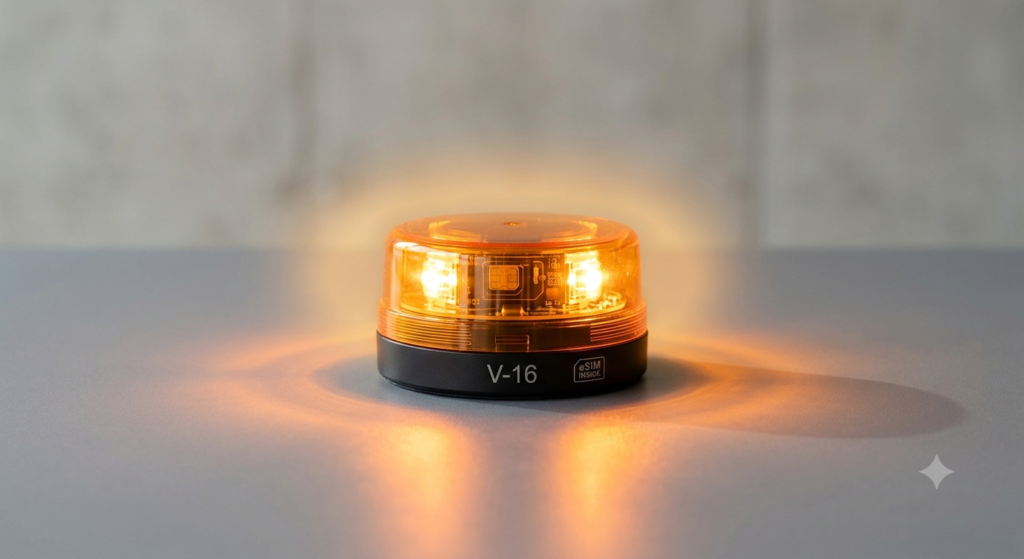
A V-16 beacon (known locally as a baliza V-16) is a small, portable, battery-powered safety device designed to replace traditional warning triangles during a breakdown or accident.
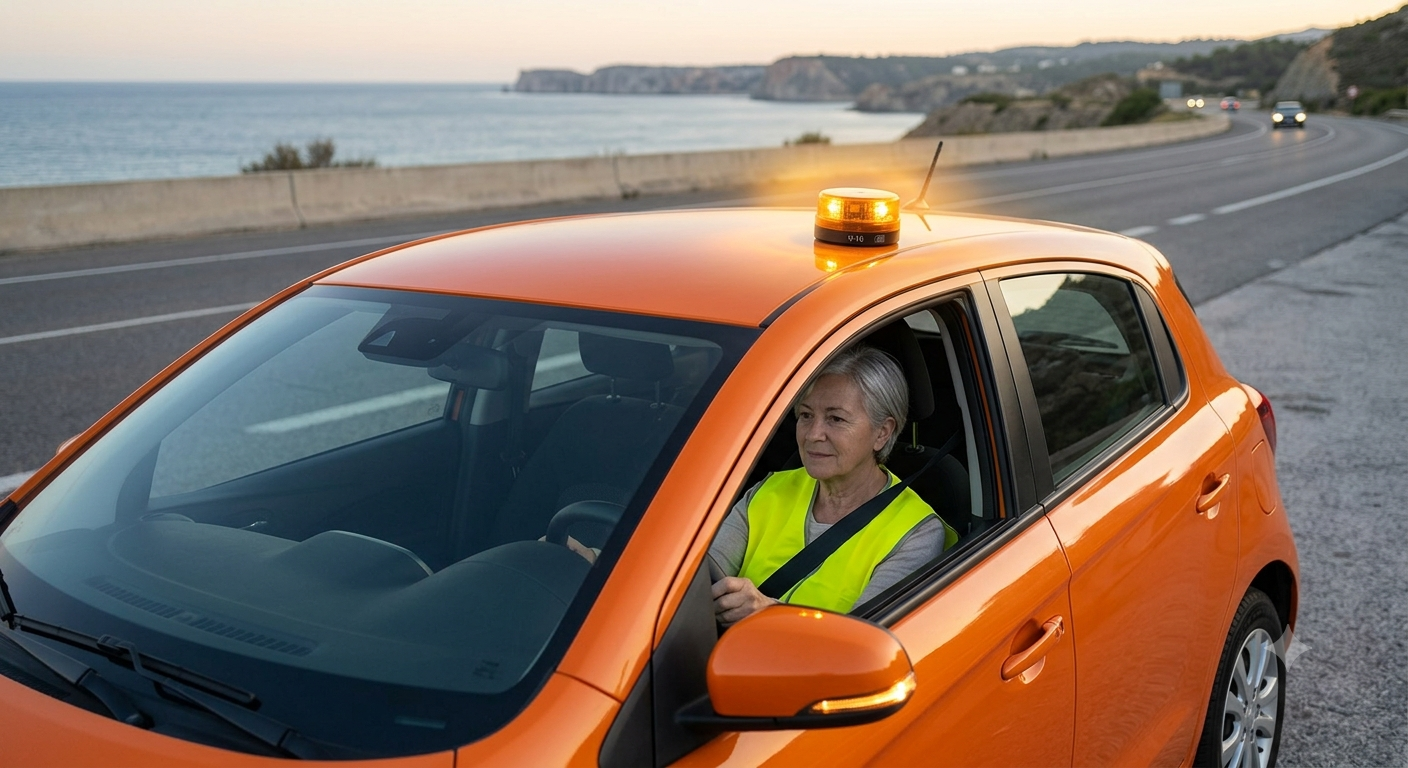
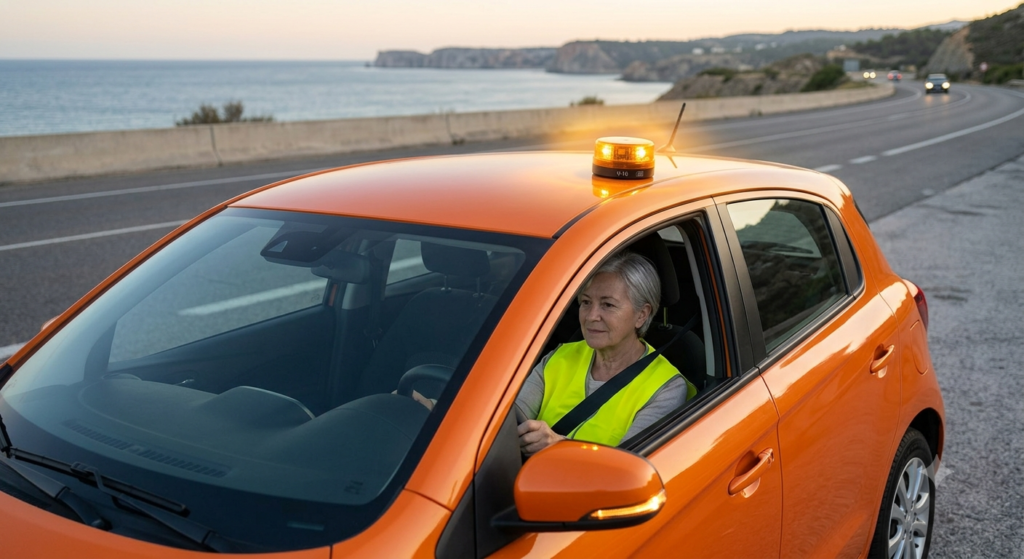
Unlike triangles, which require you to step out of your vehicle and walk 50 meters down a potentially dangerous highway to place them, the V-16 beacon is designed for maximum safety. If your car breaks down, you simply roll down your window, reach up, and place the magnetic beacon directly onto the metal roof of your car.
Once attached, it automatically activates, emitting a high-intensity, 360-degree amber flashing light that can be seen up to 1 kilometer away in all weather conditions.
The Key Feature: “DGT 3.0” Connected Geolocation
The real game-changer of the 2026 law is that “analog” or non-connected flashing lights (the cheap ones sold in supermarkets in previous years) are no longer legal.
An approved 2026 V-16 beacon features an integrated eSIM card with GPS tracking. The moment the magnet touches your car roof, the device sends your vehicle’s exact coordinates to Spain’s cloud-based DGT 3.0 traffic platform every 100 seconds.
This digital connection immediately alerts:
Local emergency services and roadside assistance.
Satnav apps (like Google Maps or Waze) used by nearby drivers.
Digital highway message boards ahead of your location.
Privacy Note: The data sent to the DGT is entirely anonymous. The eSIM is not registered to your name, passport, or phone number. It simply broadcasts: “There is a broken-down vehicle at these exact GPS coordinates.”
Do I Need to Buy One for My Holiday in Quesada?
If you live in Spain and own a Spanish-registered car, yes, you must purchase a certified, DGT-approved connected beacon immediately to avoid fines ranging from €80 to €200.
However, if you are a tourist visiting the Costa Blanca and hiring a vehicle, you do not need to worry about buying one.
Under Spanish rental laws, the car rental company is legally obligated to ensure the vehicle is fully equipped with all mandatory safety gear. When you hire a vehicle through a reputable local supplier, a certified, fully functional V-16 connected beacon will already be waiting for you in the glove compartment.
How to Correctly Use a V-16 Beacon in an Emergency
If you experience a mechanical issue or an accident while driving on the Costa Blanca, follow this simple procedure to stay safe and compliant:
Pull over safely
Move your vehicle to the hard shoulder, an emergency slip road, or as far off the main driving lane as possible. Switch on your car’s hazard warning lights.
Deploy the V-16 light
Do NOT exit the vehicle. Open your glove box, grab the V-16 beacon, and turn it on. Roll down your window, reach out, and place the magnetic base securely on the highest point of your car roof.
Stay inside and wait
Keep your seatbelt fastened and remain inside the car with your passengers. Because the beacon automatically broadcasts your location to the DGT 3.0 network, nearby highway panels will already be warning traffic to slow down.
Call for assistance
The V-16 beacon alerts traffic authorities to your location, but it does not automatically call a tow truck or insurance company. You must still call emergency services (112) or your car rental provider to arrange roadside pickup.
What About the Mandatory Reflective Vest?
A common misconception is that the V-16 beacon replaces the high-visibility reflective vest (chaleco reflectante). This is incorrect.
The yellow high-visibility vest remains 100% mandatory in Spain. Even though the beacon allows you to stay inside your vehicle, if an extreme emergency forces you to step out onto the road (such as a vehicle fire), you must put on your reflective vest before opening the car door.
Drive with Absolute Peace of Mind
Navigating foreign traffic laws can feel stressful, but it shouldn’t get in the way of a fantastic holiday.
At Direct Car Rental Quesada, we take your safety and legal compliance seriously. Every single vehicle in our fleet comes fully equipped with a fully certified, DGT-approved connected V-16 emergency beacon, high-visibility vests, and all necessary documentation in the glovebox.
We believe in complete transparency and absolute peace of mind—meaning zero hidden fees, a fair full-to-full fuel policy, and a car that is 100% legal the second you turn the key.